The Ultimate Guide to Amla Powder: A Scientific and Traditional Approach to Skincare & Haircare
- spreadkeralanatura
- Nov 17, 2025
- 4 min read
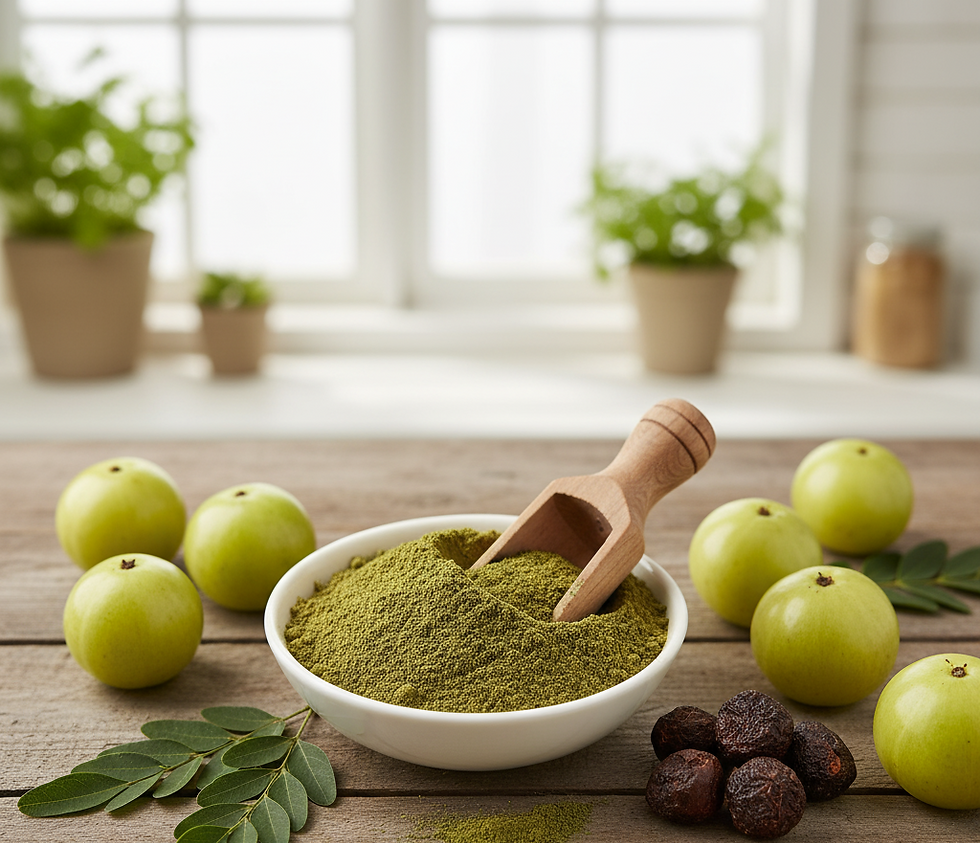
In the world of natural beauty and wellness, Amla powder stands out as a time-tested superfood for both skin and hair. Known scientifically as Phyllanthus emblica or Emblica officinalis, amla, also called Indian gooseberry, is revered in Ayurveda for its rejuvenating properties. Today, modern research validates what ancient traditions have always known: amla powder is a powerful bioactive ingredient with profound benefits for skin, hair, and overall well-being.
If you're looking to naturally enhance your beauty routine, reduce hair fall, or fight signs of aging, this blog will walk you through the science-backed benefits of amla powder, how it works, and how to use it effectively.
What Makes Amla Powder So Special?
Amla is one of the richest natural sources of vitamin C, containing 20 to 30 times more than oranges. Unlike synthetic vitamin C, the vitamin C in amla is bonded with tannins, making it heat-stable and exceptionally bioavailable even after drying. This makes the powdered form just as potent as the fresh fruit.
But amla isn’t just about vitamin C. It contains a rich combination of:
Polyphenols (like gallic acid and ellagic acid)
Flavonoids
Amino acids and fatty acids
Essential minerals like iron, calcium, and phosphorus
Together, these bioactive compounds work synergistically to deliver comprehensive skincare and haircare benefits.
Amla Powder for Hair: A Natural Remedy for Strength, Growth, and Shine
For centuries, amla has been a staple in Indian haircare rituals. Here’s how it can transform your hair:
1. Stimulates Hair Growth
A 2015 study found that extracts of amla promote the proliferation of dermal papilla cells, which are essential for hair growth. When applied to the scalp, amla boosts blood circulation and activates hair follicles to reduce hair fall and improve thickness naturally.
Try this: Mix amla powder with warm coconut oil, massage into the scalp, and cover with a warm towel for 30 minutes for deep nourishment.
2. Prevents Premature Greying
Oxidative stress is a major cause of premature greying. Amla’s antioxidant compounds protect hair follicles and maintain melanin production for longer, delaying the greying process.
3. Controls Dandruff and Scalp Infections
Its natural antimicrobial and anti-inflammatory properties help clear dandruff, reduce itchiness, and soothe scalp irritation.
Dandruff treatment: Combine amla powder with tea tree oil and yogurt to form an antifungal paste. Apply weekly for visible results.
4. Natural Hair Conditioner
Amla smoothens hair cuticles naturally. Unlike silicone-based products that cause buildup, amla conditions hair without weighing it down- leaving it shiny, voluminous, and frizz-free.
Amla Powder for Radiant Skin: Anti-Aging, Brightening & Acne Control
Amla powder is a rising star in natural skincare due to its ability to support skin health on multiple levels.
1. Boosts Collagen and Reduces Signs of Aging
With its incredibly high vitamin C content, amla is a potent stimulator of collagen and elastin production, helping maintain skin firmness and reduce wrinkles.
Clinical studies show that topical application of amla-based skincare improves skin texture, elasticity, and hydration in 8–12 weeks.
2. Brightens Skin & Fades Pigmentation
Amla contains compounds that inhibit tyrosinase, a key enzyme in melanin production. This helps fade dark spots, hyperpigmentation, and acne scars evening out skin tone naturally.
3. Natural Exfoliant & Acne Remedy
Its natural acids gently exfoliate dead skin cells, unclog pores, and reduce oiliness. Amla also has antibacterial properties, making it effective as a spot treatment or full-face mask for acne-prone skin.
DIY face mask: Mix amla powder with honey and rose water for a brightening and soothing face pack.
The Science Behind Amla: Active Compounds and Mechanisms
Polyphenols and Tannins
These compounds act as powerful free-radical scavengers, protecting hair follicles and skin cells from oxidative damage.
Flavonoids
Enhance blood circulation, improve nutrient delivery, and support cellular regeneration.
Amino Acids & Fatty Acids
Essential for collagen synthesis and maintaining the skin’s lipid barrier function.
Minerals: Iron, Calcium, and Phosphorus
Support hair strength, cellular energy production, and skin structure.
In research: Amla exhibits an ORAC value of over 260,000 per 100g, placing it among the most powerful natural antioxidants in the world.
Evidence-Based Usage Tips
For Hair Loss & Thinning
Apply a paste of amla powder and rosemary oil 2–3 times a week to stimulate growth and prevent early greying.
For Anti-Aging Skincare
Use a face mask of amla powder and aloe vera three times weekly before bedtime to boost collagen and deeply hydrate the skin.
For Acne-Prone Skin
Mix amla with turmeric and rose water for a naturally antibacterial acne treatment that reduces inflammation and fades blemishes.
Real-Life Scenarios Where Amla Shines
Postpartum Hair Loss: Amla helps restore hair volume naturally after pregnancy.
Menopausal Skin Changes: Amla balances oxidative stress and supports skin structure for mature women.
Hyperpigmentation: Consistent use reduces dark spots from acne or sun exposure.
Dandruff & Seborrheic Dermatitis: Fights fungal growth and relieves persistent flakiness.
How to Use Amla Powder Internally
While this blog focuses on external use, consuming amla powder internally in small doses (¼ tsp daily) can boost overall immunity, digestion, and skin luminosity from within.
Amla Brings Together Nature and Science
Whether you're battling dandruff, hair fall, pigmentation, or signs of aging, amla powder is a trusted natural remedy backed by modern research. It's rich in bioactive compounds, delivers multi-dimensional benefits, and integrates seamlessly into both skincare and haircare routines.
If you're looking for a single ingredient that truly does it all amla powder is the one.


Comments